Custom Plush Toy Manufacturing Insights - ZOZO Plush Blog
Knowledge Hub & Manufacturing Insights

Plush Toy Manufacturing Insights & Blog

Expert guides, OEM/ODM production tips, and industry trends from Vietnam's leading custom plush manufacturer.

0%

A teddy bear can look charming in a product photo and still disappoint in person. Uneven stitching, stiff fabric, or a crooked embroidered name may change the whole impression. For brands, retailers, and gift companies, choosing a supplier means checking more than price and appearance.

Circana reported that global toy sales grew 1% in 2024 across 12 tracked markets, with growth in seven of them. The modest increase is a useful reminder: demand can shift, and product differentiation matters. A Custom Embroidered Teddy Bear offers a personal touch, but consistent results depend on practical details. Ask suppliers about embroidery placement, thread durability, fabric options, sample approval, minimum order quantities, and production timelines. Request clear photos of finished samples, including close-ups of lettering and seams.

Small details matter.

This 2026 guide compares suppliers through those everyday purchasing questions, alongside communication, customization range, and quality-control practices. Industry data can show broad market movement, but it cannot inspect a seam or confirm that a name is spelled correctly. Buyers should verify specifications directly and review a physical sample when possible. That step takes time. It can also reveal gaps that a polished catalog hides. Supplier rankings are useful starting points, not guarantees; the best fit depends on your design, order size, budget, and delivery needs.
2026 Top Custom Embroidered Teddy Bear Suppliers?

What Custom Embroidered Teddy Bear Suppliers Offer

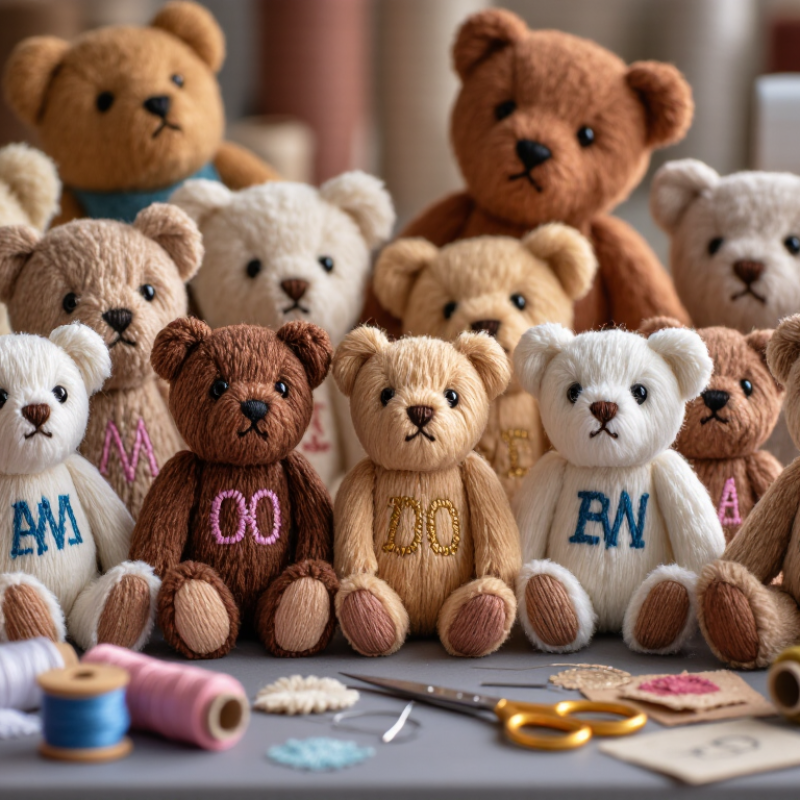
Custom embroidered teddy bear suppliers usually offer more than a stitched name. Buyers can choose bear sizes, fabric colors, thread palettes, and embroidery placement. Many suppliers digitize artwork and provide a sample for approval. Ask whether the sample uses the same fabric and thread planned for production. A tiny stitch may look crisp on screen but blur against plush pile. Small details matter.

Services may also include pattern adjustments, hang tags, gift boxes, and shipping coordination. Some suppliers share material specifications and inspection photos; others provide only basic checks. Confirm the process in writing. Request a quote that separates sample fees, unit costs, packaging, and freight. Check minimum order quantities and realistic lead times before paying a deposit. Thread color can shift under warm indoor lighting, so approval may not catch everything. That is easy to underestimate.

Tips: Send clear, high-resolution artwork and specify exact wording, colors, and placement. Ask for close-up sample photos. Leave room for one revision; the first version may not be perfect.

How to Evaluate Supplier Quality and Capabilities

When evaluating custom embroidered teddy bear suppliers, look beyond a polished sample. Ask how they control fabric, filling, stitching, and embroidery across larger orders. A clean sample can hide inconsistent production. Request photos or videos of finished batches, plus close-ups of embroidered eyes, lettering, and seams. Check the details. Slightly uneven lettering may be acceptable for a handmade look, but loose threads or poorly secured features can signal weak quality control.

Tips: Send a clear design file and specify thread colors, placement, and finished dimensions. Ask for a pre-production sample, and confirm who pays for revisions. Compare the sample with your approved artwork, not just the supplier’s product photos. Small flaws matter.

Assess communication and production capability, too. A reliable supplier should explain realistic lead times, minimum order quantities, and how defects are handled. Ask what inspection steps occur before packing, and whether the supplier can share a written quality checklist. For larger orders, clarify whether materials and embroidery settings will remain consistent between batches. Keep records of approved specifications and sample feedback. I would still inspect a delivered order; even a detailed checklist cannot catch every variation.

Which Customization and Production Options Matter

A strong custom embroidered teddy bear supplier should offer more than a choice of fur color. Ask which fabrics, bear sizes, thread colors, and embroidery placements are available. A chest design may need wider stitching than a small paw detail. Request a digital proof showing the artwork at its actual size, then check whether fine lines remain clear. Small details matter. Also confirm whether the supplier can match thread colors against a physical reference, since screen colors can mislead.

Production options deserve equal attention. Ask about sample charges, minimum order quantities, sample approval steps, and estimated timelines. A pre-production sample lets you inspect the seams, softness, and embroidery tension before a larger run begins. Find out how finished bears are checked: loose threads, uneven stitching, and inconsistent placement are easy to miss in a single photo. Packaging and individual labels may also affect cost and delivery time. A polished sample cannot guarantee every unit will match perfectly, so ask how defects are recorded and addressed. It is tempting to focus on the lowest quote, but unclear specifications can make comparisons unreliable. Request written details for materials, measurements, artwork, and inspection criteria before approving production.

2026 Top Custom Embroidered Teddy Bear Suppliers? Which Customization and Production Options Matter

Example Teddy Bear Sizes for Custom Embroidery

Size affects embroidery placement and usable design area: a larger bear can accommodate a larger or more detailed embroidered design. These are common example plush heights, not a guarantee of any supplier’s available sizes; confirm dimensions, fabric, stitch details, sample approval, and production lead time before ordering.

How to Compare Leading Suppliers in 2026

Comparing custom embroidered teddy bear suppliers in 2026 takes more than checking a quote. Ask each supplier for a sample made with the same bear size, fabric, and artwork. Look closely at the eyes and mouth: tight, even stitches should follow the design without puckering the plush. Check the seams, too. A smooth sample can hide loose stitching underneath.

Request a written breakdown of setup fees, sample costs, minimum order quantities, and production time. Then compare like for like. A lower unit price may exclude packaging or inspection, while a shorter lead time may depend on a larger order. Ask how the supplier checks thread color, embroidery placement, and finished dimensions across a production run. Specific answers matter. “We check everything” is not much evidence.

Communication deserves a place in your comparison. Send one clear artwork file and ask for a preproduction sample, dated production photos, and a named contact for questions. Notice whether replies address your actual details, such as a small nose design that may lose definition on textured fabric. I would not treat a polished sample as proof of consistent bulk quality; that assumption is tempting, but not always sound. Compare the inspection process as carefully as the bear itself.

How to Verify a Supplier Before Placing an Order

2026 Top Custom Embroidered Teddy Bear Suppliers?
How to Verify a Supplier Before Placing an Order

A polished catalog is only a starting point. Ask for a sample made with your intended fabric, filling, and embroidery design. Check the face closely: Are the eyes centered? Do the stitches look even on the back? Small details matter. Request close-up photos in natural light, plus a video showing the sample from several angles. A sample can still differ from mass production, so get written approval for the final specifications.

Ask how the supplier checks seam strength, embroidery placement, and color consistency. Request relevant product test records for your destination market, and confirm what each record covers. Ask who handles inspection, how defects are recorded, and what happens if an order misses the agreed standard. Vague answers deserve follow-up. A live factory call can help confirm equipment and workflow, but it does not replace clear paperwork or an approved sample.

Before paying, compare the quote, production timeline, shipping terms, and revision limits in writing. Check business references where possible, and start with a manageable order if the supplier is new to you. I would not treat a quick reply as proof of reliability; I have seen how easy it is to confuse friendliness with process. No check removes every risk. But specific questions, documented answers, and a realistic sample give you firmer ground before committing.

FAQS

What should I inspect in a supplier’s sample?

Check the eyes, seams, embroidery, and fabric. Look for loose threads and uneven stitching. Small details matter.

Why request a pre-production sample?

It lets you check the actual fabric, filling, and design before a larger run. Compare it with your approved artwork. A sample still cannot guarantee every bear will match.

What information should I provide for embroidery?

Send a clear design file with thread colors, placement, and finished dimensions. Ask for a digital proof at actual size. Fine lines can disappear.

How can I check production quality across a batch?

Request photos or videos of finished units, including close-ups of faces and seams. Ask what inspection steps happen before packing. I would still inspect the delivered order.

Which customization options should I ask about?

Confirm available fabrics, sizes, thread colors, and embroidery placements. A chest design may need wider stitching than a small paw detail.

What production details should be confirmed in writing?

Record sample charges, minimum quantities, timelines, revision limits, materials, measurements, and inspection criteria. Clear records help. They do not prevent every mistake.

How can I assess a supplier’s communication and process?

Ask how defects are recorded and handled, and whether a written quality checklist is available. A quick reply is not proof of reliability.

What should I verify before paying?

Compare the quote, production timeline, shipping terms, and revision limits in writing. Check references where possible, and consider a manageable first order. I might still feel uncertain. That is worth acknowledging.

Conclusion

Choosing the right Custom Embroidered Teddy Bear supplier involves more than comparing prices. A reliable supplier should offer clear embroidery options, suitable bear materials and sizes, sample development, and production support for different order quantities. Evaluate the quality of stitching, fabric, finishing, and packaging, along with the supplier’s ability to communicate clearly and meet agreed timelines. Ask how designs are prepared for embroidery and whether samples can be reviewed before full production begins.

When comparing suppliers in 2026, consider customization flexibility, minimum order quantities, production capacity, quality checks, and delivery estimates. Request written quotations that explain what is included and identify any additional costs. Before placing an order, verify the supplier’s business information, review recent examples of comparable work, and clarify the process for handling defects or delays. These steps help you compare options fairly and select a supplier whose capabilities and service match your project.

Isabella

Isabella

Isabella is a dedicated marketing professional with a strong understanding of the company’s products, customers, and evolving market needs. She combines strategic insight, clear communication, and practical industry knowledge to create content that helps readers make informed decisions. As a......