Custom Plush Toy Manufacturing Insights - ZOZO Plush Blog
Knowledge Hub & Manufacturing Insights

Plush Toy Manufacturing Insights & Blog

Expert guides, OEM/ODM production tips, and industry trends from Vietnam's leading custom plush manufacturer.

0%

Choosing Branded Mascot Plush Toys for global buyers requires more than attractive artwork. It requires commercial judgment, documented quality, and cultural awareness. Licensing International’s 2024 Global Licensing Industry Study reported that licensed merchandise and services generated approximately $356.5 billion in global retail sales in 2023. This figure shows the power of recognizable characters, but it also raises expectations for consistency, authenticity, and responsible manufacturing.

Market evidence supports continued interest in plush products. Grand View Research estimates that the global plush toys market reached about USD 7.28 billion in 2023 and may expand through 2030. Yet market growth does not guarantee a successful purchase. Buyers should examine fabric softness, embroidery accuracy, seam strength, stuffing recovery, packaging dimensions, and color consistency across samples. Small details matter.

Especially at scale.

A mascot with uneven eyes can weaken brand trust. A loose thread can create a safety concern. A package that ignores local language requirements may delay distribution. Professional buyers should request material specifications, production samples, quality-control records, and age-grade testing aligned with applicable standards, such as EN 71, ASTM F963, or ISO 8124. Requirements vary by destination, so local compliance review remains essential.

The best choice also reflects real customer behavior. Will children hug the toy daily? Will collectors preserve it unopened? Will retailers need compact cartons and barcode-ready packaging? Some purchasing teams focus heavily on the lowest unit price. That approach can be shortsighted. A cheaper toy may produce higher returns, weaker reviews, or inconsistent brand presentation. This guide examines the evidence, practical checks, and uncomfortable trade-offs behind selecting reliable Branded Mascot Plush Toys for international markets.

How to Choose Branded Mascot Plush Toys for Global Buyers?

Understanding Global Demand for Branded Mascot Plush Toys

Understanding Global Demand for Branded Mascot Plush Toys

Global demand for branded mascot plush toys varies by culture, age group, and buying occasion. In my sourcing experience, buyers often request small plush toys for events, retail shelves, and online campaigns. A 15-centimeter mascot may suit gift boxes, while a 30-centimeter version feels better for home display. Soft fabric, clear facial features, and durable stitching usually influence repeat orders more than complex details.

Regional preferences deserve close attention. Some buyers favor cheerful colors and compact packaging. Others prefer neutral tones, embroidered details, or larger collectible designs. Review local customer feedback before fixing the product size. Packaging also matters when cartons travel through humid ports or crowded warehouses. Moisture-resistant packing can protect the plush surface and printed labels. It is a practical detail.

Safety and reliability cannot be treated as decoration. Suppliers should provide material information, age grading, production samples, and test records that match the destination market. Check loose parts, seam strength, stuffing cleanliness, and label accuracy. A sample may look excellent under showroom lights but fail after repeated handling.

I have seen this mistake happen. Forecasting demand is also imperfect. Seasonal events, shipping costs, and sudden online trends can change an order within weeks. Buyers should begin with a controlled quantity, measure sales by region, and adjust colors or sizes using real customer responses. Small data is still useful.

Defining Brand, Audience, and Product Requirements

Choosing Branded Mascot Plush Toys for Global Buyers

A strong mascot begins with a clear brand definition. Is the character playful, trustworthy, adventurous, or premium? Write three practical adjectives before discussing fabric or pricing. This small exercise prevents design teams from chasing attractive but unrelated ideas. The mascot should reflect recognizable colors, shapes, and personality traits without copying existing characters. Consistency matters across plush toys, packaging, displays, and digital images.

Audience research should guide every product decision. A toy for young children needs soft seams, secure features, washable materials, and age-appropriate dimensions. A collectible for older audiences may allow finer embroidery and more detailed accessories. Consider local preferences too. Some colors, animals, or facial expressions may feel friendly in one market and unsuitable in another. Ask real buyers, not only internal staff. Their answers can be surprising.

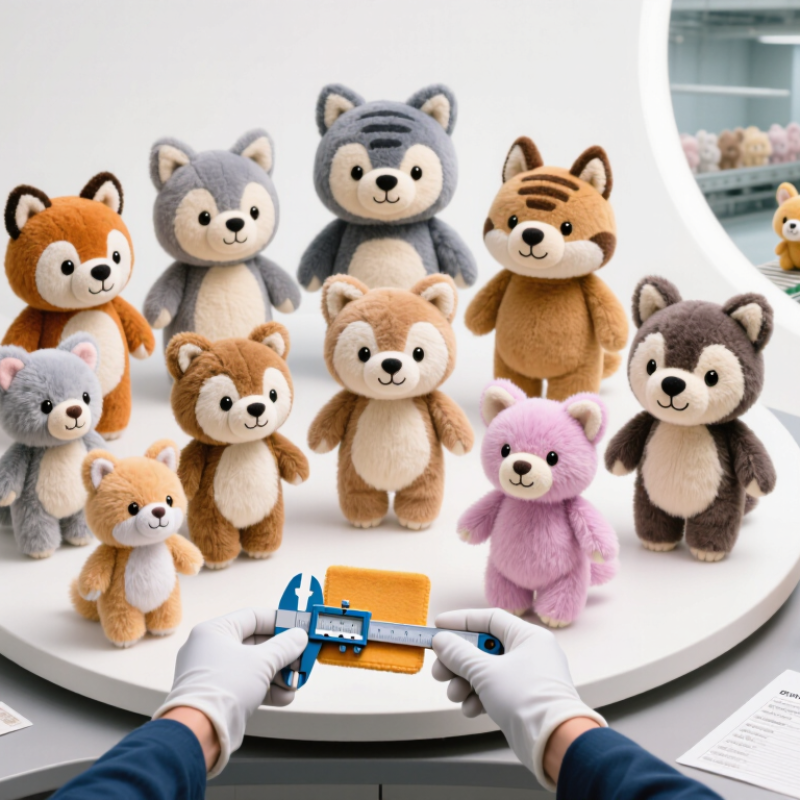
Product requirements must become measurable specifications. List height, weight, fabric composition, filling, stitching method, logo placement, packaging, quantity, and target cost. Request a physical prototype. Inspect its balance, softness, loose threads, odor, and color accuracy under natural light. Independent testing and complete material records improve purchasing confidence. Check destination-market labeling and safety requirements with qualified specialists. Do not rely on assumptions. A perfect brief is rare. Leave room for revision, because the first sample may look appealing yet feel wrong in a child’s hands. Record every change and approve a final reference sample before production.

How to Choose Branded Mascot Plush Toys for Global Buyers? - Defining Brand, Audience, and Product Requirements

Requirement Dimension Recommended Definition Typical Benchmark for Global Buyers Why It Matters Buyer Checkpoint
Brand Personality Friendly, playful, premium, educational, or sustainability-focused Select 3–5 personality keywords and convert them into colors, facial expression, proportions, and fabric choices A mascot should communicate the same identity as the organization or campaign Can the character be recognized without printed text or a logo?
Primary Audience Children, teenagers, adults, collectors, event visitors, or corporate gift recipients For children under 3 years, avoid detachable small parts, long cords, and unsecured plastic components Age affects safety testing, dimensions, decoration, and packaging language Is the intended age range clearly stated on the packaging?
Target Market Destination region and selling channel, such as retail, e-commerce, events, museums, or promotional campaigns Prepare market-specific labels, language, importer details, and conformity documentation before production Toy regulations, labeling rules, and consumer expectations vary by destination Which countries will receive the product in the first shipment?
Product Role Retail product, limited-edition collectible, event giveaway, loyalty gift, or educational item Use higher-detail construction for collectibles and simpler, durable construction for high-volume giveaways The use case determines the acceptable balance between detail, durability, and unit cost Will the item be sold, displayed, played with, or distributed at an event?
Recommended Size Overall height, width, seated height, and acceptable tolerance Common formats include 15–20 cm for promotional gifts, 20–30 cm for retail plush, and 30 cm or larger for display pieces Size influences visibility, shipping volume, shelf placement, and material consumption Has the size been defined using a technical drawing rather than a visual reference only?
Materials Outer fabric, filling, thread, embroidery, trims, and packaging materials Common options include polyester plush fabric, polyester fiberfill, embroidered details, and recycled-content packaging Material selection affects softness, color consistency, wash performance, safety, and cost Are all materials documented with specifications and test requirements?
Color Accuracy Approved color references for fabric, embroidery, printing, and accessories Approve a physical color standard and define an acceptable visual tolerance before bulk production Different fabrics and production batches can show visible color variation Has a signed or digitally approved color sample been archived?
Safety Requirements Mechanical, physical, flammability, chemical, and labeling requirements for the destination market Typical evaluations cover seams, pull strength, accessible components, flammability, heavy metals, phthalates, and other restricted substances A plush toy may require different testing depending on age grading and destination country Has the final product been tested in its finished, packaged configuration?
Durability Seam strength, attachment security, shape retention, surface abrasion, and cleaning performance Define expected handling conditions and require inspection after repeated compression, pulling, and surface rubbing Durability protects user safety and reduces returns caused by loose parts or distorted filling What failure conditions should the product withstand during normal use?
Branding Method Embroidery, woven label, printed fabric, hangtag, removable accessory, or packaging branding Embroidery is generally suitable for durable facial features; printed details require rub and wash-performance checks The decoration method affects appearance, tactile quality, safety, and production complexity Are logo clear-space, size, placement, and color rules included in the artwork file?
Packaging Individual bag, paper sleeve, printed box, hangtag, warning label, and shipping carton Use packaging that protects the plush from moisture, compression, dust, and deformation during international transport Packaging influences presentation, warehouse handling, shipping cost, and regulatory compliance Are carton dimensions, packing quantity, gross weight, and recycling marks confirmed?
Order Quantity Initial order, forecast quantity, color count, and replenishment plan Custom production often becomes more cost-efficient at several hundred to several thousand units, depending on construction and packaging complexity Quantity affects tooling, material purchasing, labor allocation, and unit pricing Is the forecast separated into confirmed quantity and optional replenishment?
Lead Time Prototype, approval, bulk production, inspection, and international transport time Allow additional time for artwork approval, sample revisions, safety testing, and seasonal logistics congestion A realistic schedule reduces launch delays and prevents rushed quality decisions Does the timeline include approval gates and a final pre-shipment inspection?
Cost Structure Sample fee, tooling, unit price, packaging, testing, freight, duties, and inspection Compare total landed cost rather than unit price alone; freight can vary substantially with carton volume and destination A low factory price may not represent the final delivered cost Are one-time and recurring costs shown separately in the quotation?
Quality Acceptance Defect categories, measurement tolerances, color tolerance, stitching standards, and inspection method Use a written inspection checklist with critical, major, and minor defect classifications Objective criteria make supplier inspection and shipment decisions more consistent Has the approval sample been retained as the reference standard?
Sustainability Claims Recycled content, reduced packaging, responsible materials, durability, and end-of-life considerations Make only claims supported by supplier records, material certificates, or recognized third-party documentation Clear evidence helps avoid misleading environmental claims in international marketing Can every sustainability statement be verified with documented evidence?

Planning note: Benchmarks are general product-development references. Final requirements should be confirmed against the laws, standards, labeling rules, and testing requirements of each destination market.

Evaluating Materials, Safety, and Manufacturing Quality

How to Choose Branded Mascot Plush Toys for Global Buyers?

Evaluating Materials, Safety, and Manufacturing Quality

A soft mascot should feel safe before it feels memorable. Choose tightly woven polyester fabric, secure stitching, and filling that resists clumping after washing. Ask suppliers for fiber-content records, colorfastness results, and batch samples. Recycled materials can support sustainability goals, but they still require chemical and durability testing. A green claim without evidence weakens buyer trust.

Safety testing must match the destination market. The U.S. Consumer Product Safety Commission reported 231,500 toy-related emergency-room injuries among children under 15 in 2023. That figure makes small detachable parts, loose eyes, cords, and weak seams serious purchasing concerns. Request testing against applicable toy standards, including mechanical, flammability, heavy-metal, and chemical requirements. Do not rely on one certificate forever. Production changes can alter results.

Manufacturing quality appears in small details. Check seam density, embroidery tension, stuffing distribution, odor, and wash recovery. A practical factory audit should compare approved samples with random units from several cartons. The EU Safety Gate report recorded 3,412 alerts in 2023, with toys among the frequently notified categories. Documentation matters. Still, paperwork cannot replace physical inspection. I sometimes trust polished samples too quickly. That is a mistake. Global buyers should define acceptance limits, retain sealed reference samples, and schedule independent pre-shipment checks.

Comparing Suppliers, Costs, Customization, and Minimum Orders

Global buyers should compare mascot plush suppliers beyond the lowest quotation. Circana’s 2024 Global Toy Market Report recorded a 2% decline in global toy sales during 2023. This pressure makes cost control important, but inconsistent quality can create larger losses.

Request a complete quotation before selecting a factory. It should separate sampling, tooling, fabric, embroidery, packaging, inspection, and shipping costs. A 20-cent fabric upgrade may improve softness, but complex three-dimensional details can increase labor sharply. Ask for production photos, material specifications, and test records. Better evidence beats confident promises.

Customization affects both cost and minimum order quantity. Simple embroidered eyes usually require less setup than molded accessories or multi-layer clothing. Many suppliers accept lower MOQs for standard fabrics, while custom colors may require several hundred pieces per shade. The International Trade Centre’s SME trade guidance emphasizes clear specifications and supplier verification for cross-border purchasing. Use a signed sample. Check seam strength, stuffing density, color accuracy, and package dimensions. Small errors become expensive at scale.

A practical comparison table should show unit price at three volumes, such as 300, 1,000, and 3,000 units. The cheapest offer may exclude inspection or export packaging. That is easy to miss. Delivery terms also change the real landed cost, especially when plush toys use bulky cartons. I would leave a modest contingency budget because revisions, damaged samples, and delayed approvals are common.

How to Choose Branded Mascot Plush Toys for Global Buyers?

Typical minimum order quantities increase as customization becomes more complex. Use these planning benchmarks when comparing suppliers, costs, customization options, and order flexibility.

Buyer guidance: Stock designs usually offer the lowest entry quantity, while fully customized plush toys commonly require higher minimum orders because of new patterns, molds, fabrics, packaging, and production setup.

Checking International Compliance, Packaging, and Delivery Terms

Choosing branded mascot plush toys for global buyers requires more than checking softness and appearance. Compliance must match each destination. Request recent laboratory reports covering ISO 8124, EN 71, or ASTM F963, where applicable. Confirm age grading, stitching strength, small-part risks, flammability, and restricted substances. The European Chemicals Agency continues emphasizing chemical safety in consumer articles. A factory certificate alone is not enough. Ask whether the report covers the exact fabric, filling, dye, and accessories.

Packaging can quietly create expensive problems. Euromonitor International’s Voice of the Consumer: Sustainability 2024 reports that 46% of consumers are trying to reduce plastic use. Use recyclable cartons, limited plastic, and clear multilingual labels. Add fiber content, country of origin, care instructions, warnings, and tracking details. Test cartons for compression, vibration, moisture, and drop damage. A beautiful package can still fail at the warehouse. PwC’s 2024 Voice of the Consumer Survey found that consumers may pay about 9.7% more for sustainably produced goods, but buyer expectations differ by market. Delivery terms should identify the Incoterms 2020 rule, importer of record, duties, insurance, inspection point, and claims process.

Tips: Match every label to the destination market. Use an accredited laboratory. Keep a sealed production sample. Confirm carton dimensions before booking freight. Recheck rules before shipment; standards and enforcement can change. My own caution is simple: never treat a low quotation as a complete landed cost.

FAQS

How should buyers define a mascot before selecting materials?

Choose three adjectives, such as playful, reliable, or adventurous.

How can buyers understand their target audience?

Ask real buyers about preferred colors, animals, sizes, and facial expressions.

What product details should appear in a purchasing specification?

Record height, weight, fabric content, filling, stitching, logo position, packaging, quantity, and target cost.

Why is a physical prototype important?

A prototype reveals balance, softness, odor, loose threads, and color accuracy.

Which materials and construction features deserve close inspection?

Select tightly woven fabric, secure stitching, and filling that resists clumping after washing.

What safety documents should global buyers request?

Request fiber records, colorfastness results, batch samples, and testing for applicable toy requirements.

How can buyers detect manufacturing problems before shipment?

Compare approved samples with random units from several cartons.

How should buyers manage revisions and final approval?

Record every design, material, and production change.

Conclusion

Choosing Branded Mascot Plush Toys for global buyers requires a balance of creative appeal, product quality, and commercial practicality. Start by studying demand in target markets, considering local preferences, age groups, seasonal trends, and the intended use of the plush toys. Clearly define the brand image, audience, size, design, colors, functions, and packaging requirements before contacting suppliers. Materials should be soft, durable, and suitable for the intended age range, while stitching, stuffing, attachments, and overall construction should be carefully inspected for safety and consistency.

Buyers should compare suppliers according to manufacturing experience, communication, customization capabilities, pricing, sampling processes, and minimum order quantities. A reliable supplier should also provide transparent production schedules and quality-control procedures. Before placing an international order, confirm applicable product safety requirements, labeling, testing documents, packaging details, shipping methods, delivery terms, and responsibility for import procedures. Careful evaluation at every stage helps buyers reduce risks, control costs, and develop Branded Mascot Plush Toys that are appealing, dependable, and suitable for multiple markets.

Elowen

Elowen

Elowen is a dedicated marketing professional with a strong understanding of product strategy, customer needs, and digital communication. As a regular contributor to the company’s professional blog, Elowen transforms complex product information into clear, practical, and valuable insights for......