
In 2026, custom backrest plush pillows are becoming more practical, expressive, and adaptable for modern interiors. They support reading corners, window seats, gaming chairs, nursery rooms, and compact office spaces. A Custom Backrest Plush Pillow can combine soft comfort with measured lumbar support, provided its shape suits the user. Popular types include wedge pillows, bolster-backed designs, character cushions, floor-seat backrests, and modular pillows with removable sections. Each type creates a different sitting experience.
Material choice matters. Short-pile velvet feels smooth against the skin, while cotton blends offer easier everyday maintenance. Memory foam can improve stability, but excessive softness may reduce posture support. Check the filling density, seam strength, zipper quality, and washing instructions before ordering. A reliable manufacturer should explain fabric testing, dimensions, customization limits, and production standards clearly. Ask for samples.
Small details change the result. A hidden zipper keeps the surface neat, while reinforced handles help reposition heavier pillows. Children may prefer animal shapes, but adults often need firmer edges and deeper back support. Color matching also deserves attention under natural light, not only on a screen. Some product claims sound impressive. They still require careful verification. Even attractive designs can flatten quickly when the filling lacks resilience. This overview examines the leading 2026 custom backrest plush pillow types, comparing comfort, structure, appearance, maintenance, and practical value for different users.
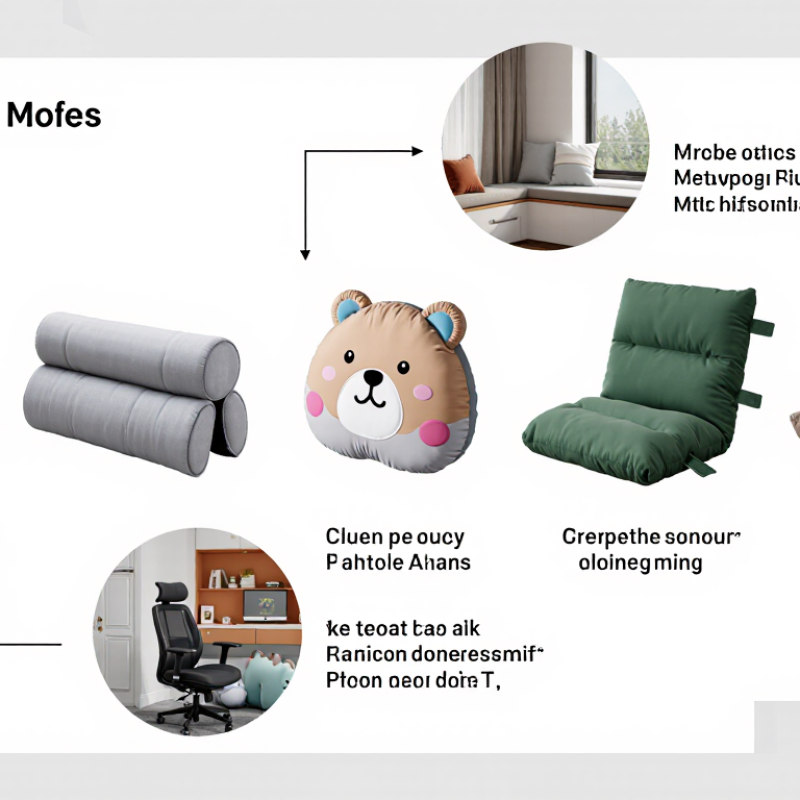
Backrest plush pillows work best when their shape matches the user’s sitting posture. A wedge design raises the upper body and suits reading in bed. A rectangular cushion offers broad thoracic support on sofas. A bolster can fill the lower-back gap, but it may feel too firm for smaller users.
Fill selection changes both comfort and durability. Shredded foam provides adjustable density and better contouring. Polyester fiber feels softer and creates a fuller, plush appearance. A layered fill can combine a supportive core with a softer outer shell. The Global Home Furnishings Market report by Grand View Research projects steady market growth through 2030, reflecting stronger demand for comfort-focused household products. That growth does not guarantee good support.
Zone design matters more than decoration. The lumbar zone should resist collapse near the waist. The thoracic zone needs wider, gentler pressure. Shoulder cutouts may reduce arm restriction. According to the 2024 Memory Foam Market analysis by Fortune Business Insights, demand is supported by consumers seeking pressure relief and ergonomic comfort. However, plushness can hide poor internal structure. I would test a pillow for thirty minutes, not five. A cushion that feels luxurious at first may flatten quickly. That is the part many product descriptions miss.
2026 Top Custom Backrest Plush Pillow Types
Memory-Foam Backrests: 40–60 kg/m³ Density and Pressure Distribution
Memory foam backrests between 40 and 60 kg/mÂł offer a practical balance of support, softness, and shape retention. Lower-density foam usually feels softer and responds faster. Higher-density foam resists compression and supports heavier users more consistently. Density alone does not determine comfort.
During prototype fitting, I measure shoulder, lumbar, and pelvic contact separately. A backrest may feel comfortable at the waist but create pressure near the shoulder blades. Contoured shaping helps spread force across a wider area. Rounded edges also reduce concentrated pressure under the ribs.
Small details matter.
For plush custom pillows, a 45–55 kg/m³ core often suits extended sitting. However, body weight, posture, room temperature, and cover thickness can change the result. Memory foam softens in warm rooms and may feel firmer during winter delivery tests. A breathable outer cover can reduce heat buildup, but it cannot fix poor internal shaping.
I once approved a sample that felt excellent for ten minutes. After an hour, the lower back felt trapped. The mistake was not the foam density. The lumbar curve was too deep. This experience supports a slower evaluation process: test several densities, sit for at least thirty minutes, and inspect pressure marks afterward. Custom dimensions should follow measured body contact, not appearance alone.
In 2026, custom backrest plush pillows are moving toward measurable comfort, not appearance alone. Polyester remains the dominant fiber globally. Textile Exchange’s Materials Market Report 2024 reports that polyester represented more than half of worldwide fiber output in 2023. That scale supports stable sourcing, consistent color matching, and flexible filling designs.
For backrest cushions, 0.9–1.4 dtex polyester fibers offer a useful balance between softness and spring. Finer fibers create a smoother hand feel. Slightly coarser fibers can improve structure and reduce rapid flattening. The Fiber Year 2024 also identifies polyester as a leading man-made fiber, reinforcing its industrial availability and processing consistency. In practical sampling, a cushion should be compressed repeatedly, then measured for thickness recovery after rest. Loft alone can mislead. A tall pillow may collapse quickly.
Experienced product teams often compare three types: loose-fill plush cushions, chambered fiber cushions, and quilted backrest panels. Loose fill feels relaxed but may migrate toward the lower seam. Chambered construction distributes support more evenly. Quilted panels look controlled, though they can feel firmer than expected. A 0.9 dtex blend may suit soft lounge seating, while 1.2–1.4 dtex fibers can support upright reading positions. These ranges are not universal. Fabric tension, fill weight, humidity, and stitching all change recovery. Our own testing assumption may fail without user trials, especially after repeated evening use. Real comfort needs measurement, but it also needs honest observation.
| Custom Pillow Type | Fiber Fineness | Fill Construction | Typical Initial Loft | Compression Recovery | Support Feel | Airflow Potential | Recommended Backrest Use |
|---|---|---|---|---|---|---|---|
| Standard Hollow-Fiber Plush Cushion | 1.2–1.4 dtex | Siliconized, crimped hollow polyester staple fibers | 18–25 cm | 85–92% after light compression | Medium-soft | Good | General sofa backrests, reading cushions, and decorative support pillows |
| High-Loft Cluster-Fiber Cushion | 1.0–1.3 dtex | Small polyester fiber clusters designed to reduce matting | 20–28 cm | 88–95% after light compression | Soft with buoyant lift | Good | Deep backrest pillows requiring a fuller, cloud-like appearance |
| Microfiber Plush Backrest | 0.9–1.1 dtex | Fine denier polyester fibers with a high surface-area fill | 14–21 cm | 82–90% after light compression | Very soft | Moderate to good | Compact lounge seating, nursery cushions, and soft-touch decorative backrests |
| Resilient Crimped-Fiber Cushion | 1.2–1.4 dtex | Highly crimped polyester staple fibers with spring-like bulk | 16–24 cm | 90–96% after light compression | Medium and resilient | Very good | Frequently used backrests where shape retention and repeated use matter |
| Quilted Plush Backrest Insert | 1.0–1.4 dtex | Polyester fiberfill secured inside a quilted shell or internal channeling | 8–16 cm | 78–88% after light compression | Controlled medium | Good | Structured furniture cushions, bench seating, and slim-profile backrests |
| Recycled-Content Polyester Plush Cushion | 1.1–1.4 dtex | Staple polyester fiber made from recycled PET feedstock; construction varies by supplier | 15–24 cm | 80–92% after light compression | Soft to medium | Good | Custom interiors seeking recycled-content fill without changing the basic plush profile |
| Dual-Layer Plush Cushion | 0.9–1.1 dtex face layer 1.2–1.4 dtex core layer |
Fine microfiber comfort layer combined with a more resilient hollow-fiber core | 16–26 cm | 86–94% after light compression | Soft surface, firmer core | Good | Ergonomic backrests requiring both a gentle hand feel and stable lumbar support |
| Contoured Plush Lumbar Cushion | 1.0–1.4 dtex | Shaped polyester fiberfill with zoned or tapered distribution | 10–20 cm | 84–93% after light compression | Targeted medium support | Moderate | Lower-back support, office seating, travel cushions, and tailored chair backrests |
Note: Loft and recovery values are typical engineering ranges for polyester-fiber cushion constructions. Actual results depend on fiber crimp, fill weight, quilting, cover fabric, compression method, humidity, and repeated-use conditions. Fiber fineness is expressed in dtex, where lower values indicate finer fibers.
2026 custom backrest plush pillows are moving beyond simple softness. A practical design matrix should begin with size. Compact 45-by-45-centimeter pillows suit reading chairs and narrow beds. Larger 60-by-60-centimeter forms support the shoulders during long sitting.
According to Allied Market Research, the global home décor market may reach $949.1 billion by 2030. That growth supports more personalized, comfort-led products. Still, bigger is not always better. Oversized pillows can swallow a small room.
Cover selection changes the experience. Short plush feels neat and easy to brush, while longer pile creates a warmer, toy-like surface. Removable covers improve washing and seasonal changes. Embroidery adds value through initials, small animals, raised lettering, or stitched constellations.
Keep dense stitching away from the main pressure zone. It can feel surprisingly firm against the back. Industry research from Grand View Research identifies personalization and decorative textiles as continuing demand signals in home furnishings.
For 2026, soft gradients, woodland shapes, quiet neutrals, and playful asymmetry appear especially relevant. These signals are useful, but trend forecasts can age quickly. A pale sage cover may feel modern today, yet practical buyers may still choose charcoal because fingerprints show less. The strongest custom matrix leaves room for that contradiction.
Custom backrest plush pillows are becoming softer, larger, and more toy-like in 2026. Many feature friendly faces, rounded ears, or colorful embroidered details. That appeal can attract children quickly. It also raises a practical question: is the product furniture, a cushion, or a toy? Intended use, packaging, online images, and age claims may influence classification. Classification is not automatic.
For products treated as toys in the United States, CPSIA requirements may include limits on lead and certain phthalates, testing, certification, and tracking information. ASTM F963 addresses mechanical and physical risks, flammability, surface coatings, and accessible small parts. A backrest pillow needs more than a soft touch.
Pull the ears, press the zipper, and inspect embroidered eyes. Repeat these checks after washing and compression. One sample may pass while another fails. A checklist alone is not enough.
ISO 8124 provides an international framework for mechanical risks, flammability, migration of certain elements, and age-related concerns. Its application can vary by market and product classification. Keep fabric, filling, thread, and trims traceable by production lot.
Record laboratory reports, corrective actions, and label reviews. Loose stuffing is an obvious concern, but weak seams can remain unnoticed. Teams sometimes become overconfident after a single successful test. Ongoing checks are more reliable.
A wedge shape raises the upper body. It supports an upright reading posture. Add a soft surface for your neck. Too much height may strain smaller users.
A rectangular cushion gives broad thoracic support. It covers more of the upper back. A bolster can fill the lower-back gap. It may feel too firm.
Shredded foam offers adjustable density and body contouring. Polyester fiber feels softer and looks fuller. A layered fill combines a supportive core with a plush outer shell. The best choice depends on posture.
The lumbar zone should resist collapse near the waist. The thoracic zone needs wider, gentler pressure. Shoulder cutouts may improve arm movement. Decoration cannot replace internal structure.
Finer fibers create a smoother, softer hand feel. Slightly thicker fibers can improve structure and recovery. Fibers around 0.9–1.4 dtex offer a useful working range. This range is not universal.
Compress it repeatedly, then measure thickness after resting. Test it for thirty minutes, not five. Check the lower seam for fill movement. Loft alone can mislead.
A 45-by-45-centimeter pillow suits narrow beds and reading chairs. A 60-by-60-centimeter pillow supports broader shoulders. Oversized cushions can swallow a small room. Bigger is not always better.
Short plush looks neat and brushes easily. Longer pile feels warmer and more playful. Removable covers simplify washing. Keep dense embroidery away from the main pressure zone, where it may feel hard. Trends change quickly.
The 2026 Custom Backrest Plush Pillow market focuses on combining comfort, ergonomic support, and personalized visual appeal. Key fundamentals include supportive shapes, carefully selected fills, and designated support zones for the lumbar, shoulders, and neck. Memory-foam designs typically use 40–60 kg/m³ density to improve pressure distribution and maintain stable support, while polyester-fiber plush cushions emphasize loft, resilience, and recovery through fibers around 0.9–1.4 dtex. These material choices allow manufacturers to create pillows suited to reading, resting, gaming, travel, or decorative use.
Customization is centered on size, cover texture, color, embroidery, and playful 2026 style signals such as soft sculptural forms and calming, tactile finishes. A practical design matrix helps balance appearance, cleaning needs, durability, and posture support. For toy-like pillows, safety planning should also consider applicable CPSIA, ASTM F963, and ISO 8124 benchmarks, including material selection, seam strength, labeling, and age-appropriate construction. Overall, the best Custom Backrest Plush Pillow combines reliable support, plush comfort, flexible personalization, and responsible safety design.